Searching for the cosmic origins of the heaviest elements
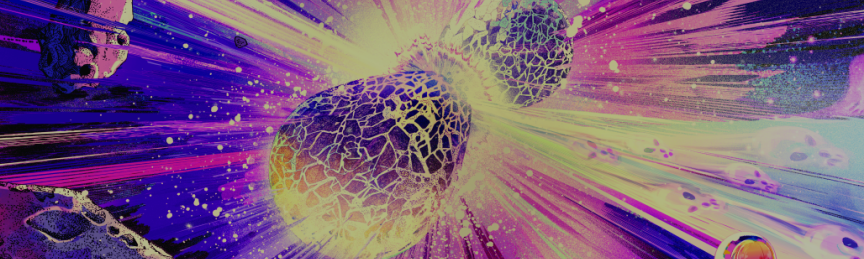
What are the origins of the heaviest elements in the Universe?
We know that hydrogen (atomic number Z=1), helium (Z=2), and lithium (Z=3) were produced during the Big Bang. Cosmic rays spallating on elements like carbon (Z=6) are thought to yield boron (Z=4), beryllium (Z=5), and some lithium. The remaining light elements up to ~ the iron group (atomic number Z ~ 30) are produced by nuclear burning within stars or the explosions (supernovae) of white dwarfs or massive stars.
Proton captures onto stable nuclei or photodissociation of heavier isotopes can make some unstable proton-rich nuclei, in what we call the p-process. This p-process can synthesize a select few isotopes up to lead (Z=82). There is also a νp-process, which operates in proton-rich environments, where antineutrino captures onto protons can neutronize material and synthesize some elements up to atomic mass A ~ 80 - 90 (Z ~ 40).
But for most elements heavier than Z ~ 30 - 40, we think the culprit is neutron capture processes. In neutron captures, free neutrons capture onto lighter seed nuclei, synthesizing the heavy elements.
Neutron captures are typically thought of as slow (s-process) or rapid (r-process), depending on the ambient density of neutrons. In the s-process, isotopes can beta decay between neutron captures, so that the s-process operates over hundeds to thousands of years. But in the r-process, seed nuclei accumulate neutrons and form heavy elements before decaying to stability, such that the r-process takes place over mere seconds! The s-process dominates for elements with Z ~ 30 - 40. The r-process dominates for almost everything heavier.
So, we can rephrase our question: Where does the r-process operate in the Universe?
My favorite reviews of the r-process and synthesis of the heavy elements in general are Cowan et al. 2021, Arcones & Thielemann 2023, and Holmbeck et al. 2023.
In short, there are many candidate sites. One is in the accretion disks around massive, rapidly rotating stars after their collapse. Another is in the presence of giant magnetar flares, where a suddenly snapped magnetic field creates a pressure wave which excavates some of the neutron star material. But the most promising avenue at the moment is in the mergers of neutron stars with each other or with black holes.
We've seen one binary neutron star merger which unamibiguously led to the synthesis of heavy elements via the r-process: the event GW170817.
GW170817: A factory for the heavy elements from a binary neutron star merger
The name GW170817 refers to the gravitational waves detected on 17 August 2017, produced by the merger of two neutron stars some 130 million light years distant. After the event was detected in gravitational waves by the LIGO and Virgo gravitational wave observatories, the entire astronomical community pointed whatever telescopes they could in the direction of GW170817. We saw an associated gamma-ray burst just a few seconds after detecting the gravitational waves. About 11 hours later, we found a visible light counterpart. That counterpart goes by many names, but the most common is AT2017gfo. A few days later, we also saw radio and X-ray counterparts. This detection of an object in both gravitational waves and light remains the only such multi-messenger detection to date!
The optical counterpart to GW170817 was unambiguously a kilonova: an optical transient powered by the radioactive decay of freshly-synthesized r-process elements. The r-process synthesizes elements far from stability, which quickly undergo alpha, beta, and gamma decays, and fission, releasing large amounts of radioactive energy. This energy is converted into thermal radiation in the ambient, opaque medium. These kilonovae evolve uniquely fast compared to other optical transient phenomena like supernovae. The optical counterpart AT2017gfo is best modelled as one of these kilonovae.
So the neutron star merger GW170817 synthesized some heavy elements, as evidenced by the optical counterpart—but how much?
This was the question at the heart of my PhD. During my PhD, I studied the optical/infrared spectra of the GW170817 kilonova AT2017gfo to search for evidence of particular heavy elements and infer how much of these elements was synthesized. I developed a tool called SPARK (Spectroscopic r-Process Abundance Retrieval for Kilonovae) to tackle this question
That's enough introductory material for now—if you want to know more, read the SPARK papers!
Image Credit: Gamma Ray Ghouls
Relevant publications
Spectroscopic r-Process Abundance Retrieval for Kilonovae III: Linking Spectral and Light Curve Modeling of the GW170817 Kilonova
N. Vieira, J. J. Ruan, D. Haggard et al. 2025. Accepted to the Astrophysical Journal, publication soon
Our third paper using SPARK! We use the compositions we infer for the GW170817 kilonova ejecta 1.4, 2.4, 3.4, and (new) 4.4 days to extract radioactive heating rates and opacities. We feed these into a light curve model to model both the spectra and light curves of the kilonova, infer the total ejecta mass, and bridge the spectral and time domains! We show how modeling both the light curves can shed light on the sources of ejected material in kilonovae.
Spectroscopic r-Process Abundance Retrieval for Kilonovae II: Lanthanides in the Inferred Abundance Patterns of Multi-Component Ejecta from the GW170817 Kilonova
N. Vieira, J. J. Ruan, D. Haggard et al. 2024. ApJ, 962, 33
The second paper using SPARK! Here, we fit the spectra of the GW170817 kilonova at 1.4, 2.4, and 3.4 days post-merger. We also test the need for multi-component ejecta models. This paper shows the time-evolving, inferred element-by-element abundance pattern of the ejecta. We find that that the same single, blue component reproduces the spectrum at 1.4 and 2.4 days. At 3.4 days, we infer a new redder component with a substantial abundance of lanthanides!
KilonovAE: Exploring Kilonova Spectral Features
with Autoencoders
N. M. Ford, N. Vieira, J. J. Ruan, D. Haggard et al. 2024. ApJ, 961, 119
Work led by MSc → PhD student Nicole Ford! Nicole produced a training set of kilonova spectra across kilonova parameter space. These spectra were then sorted into clusters using dimensionality reduction via an autoencoder. We see clusters along certain axes, such as electron fraction, and find the absorption lines which are characteristic of each these clusters. These can shed light on what the future "zoo" of kilonovae will look like!
Spectroscopic r-Process Abundance Retrieval for Kilonovae I: The Inferred Abundance Pattern of Early Emission from GW170817
N. Vieira, J. J. Ruan, D. Haggard et al. 2023. ApJ, 944, 123
Introducing SPARK, a code for performing spectral retrieval on kilonovae. SPARK uses the TARDIS radiative transfer code, mapped to Bayesian approximate posterior estimation, to infer the complete abundance pattern from the spectrum of a kilonova. In this first paper, we fit the 1.4-day spectrum of the GW170817 kilonova. We provide the complete abundance pattern for the ejecta at 1.4 days, for the first time.